
Handcrafted Hardwood Furniture with Jonathan Jung
For Jonathan Jung, woodworking has never been about simply building furniture. It’s about creating pieces with soul – pieces that feel personal, tactile, and unmistakably handmade.
“I look for projects that require a design unique to the space, high attention to detail, and at least one feature that can’t be made by a machine,” Jonathan explains. “My hands have to get involved in an organic way, so it’s clear the product is handcrafted.”
That philosophy defines the work coming out of Jonathan Jung Design, where sculptural furniture, custom furnishings, and architectural woodwork are brought to life through intuition, craftsmanship, and an unmistakable sense of artistry.
A Creative Path Shaped by Experience
Jonathan’s road into woodworking wasn’t a straight one.
Although he loved building things as a child and had accumulated his own tools by the age of 10, he initially avoided pursuing the trades professionally. Like many creatives, he was encouraged toward more traditional career paths instead. After earning a degree and working various jobs across five different countries, it wasn’t until his late 20s – while living in New Zealand with his wife – that everything shifted.
There, Jonathan was exposed to tradespeople making a rewarding living creating artistic, well-made products for homes, businesses, and vehicles. “Once I saw that there was a market for real, artistic, well made products for home, business, and vehicle, I wrote up a basic business plan and started the process of building up the business and acquiring equipment and experience,” he says.
That realization sparked the beginning of Jonathan Jung Design – and the pursuit of a career built around creativity, craftsmanship, and intentional design.

Sculptural Furniture and Design Inspired by Architecture, Music, and Organic Form
Jonathan’s work pulls inspiration from many sources and places.
Years spent traveling overseas shaped his appreciation for global architecture and historical building methods. From hand-jointed timber frames in Japan to the imperfect charm of old English homes and the sweeping curves of Brazilian mid-century design, traces of those influences can be found throughout his work.
But inspiration also comes from unexpected places.
“Vintage cars and trucks, art deco appliances, even tap dance shoes have inspired furniture components,” he says.
Music plays a role too.
“Like the music forms jazz and blues and others, there needs to be a general understanding of what a piece's rythym needs to be, and also when to let go and be a bit wild, have some fun like a virtuoso. I see furniture the same way, that a piece needs to have basic continuity, to not be a muddled mess of styles, yet also some soul, a bit of freeform whimsy”
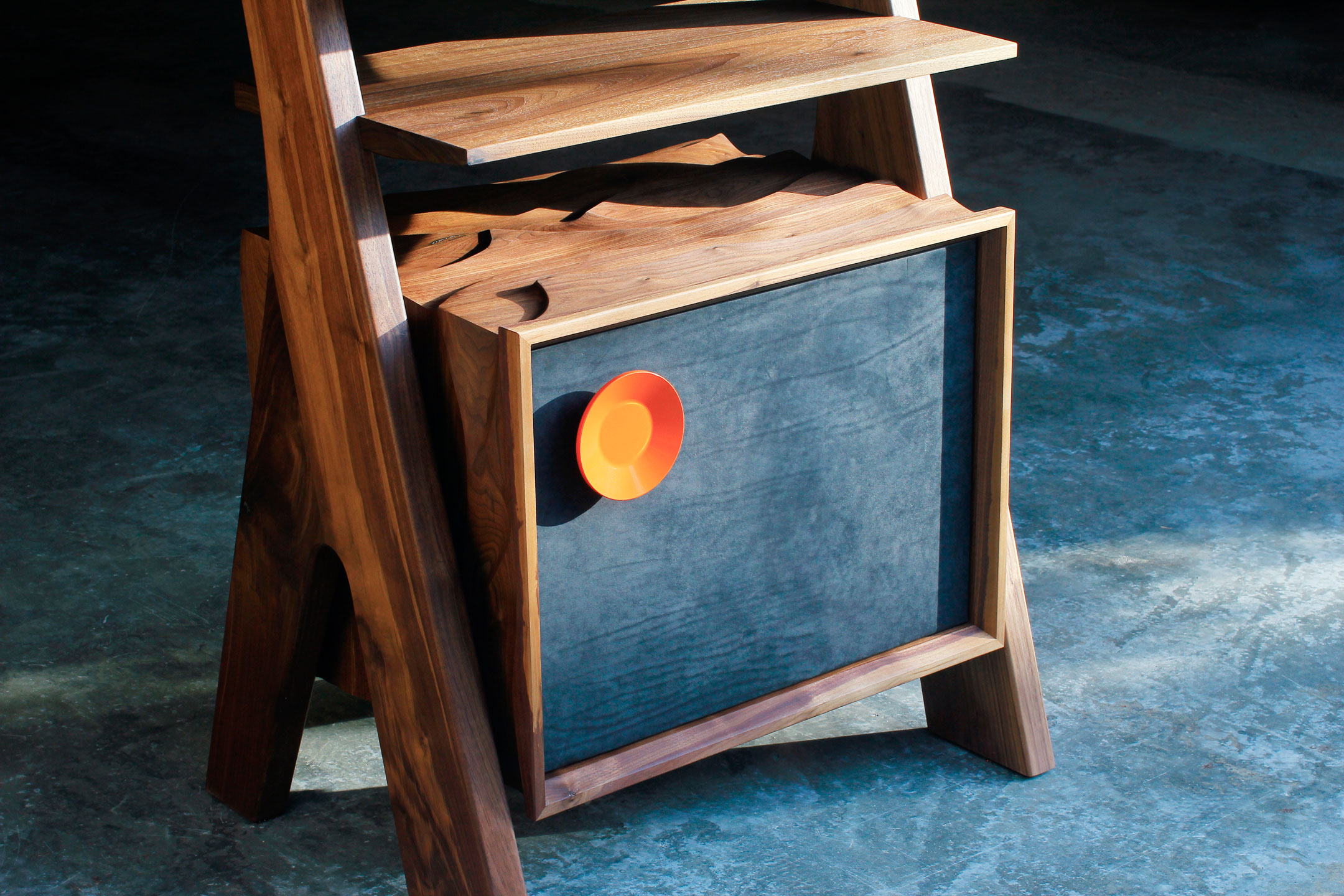
That mindset is reflected in his signature style – bold curves, carved textures, floating forms, and layered materials that feel expressive rather than rigidly planned.


Designing with Intention
Material selection is just as important as form.
For Jonathan, working organically means considering health, sustainability, and locality all at once.
“We have lots of trees here,” he says. “Why ship materials halfway around the world?”
Rather than relying on stains to create colour, he prefers selecting woods that naturally achieve the desired look. He also embraces traditional finishing techniques like Yaki Sugi, black tea applications, and iron oxidizing methods to create depth and character in more natural ways.
When it comes to protective finishes, Jonathan values products that align with both durability and craftsmanship.
“There’s a lot of good finishes out there. I think the key is picking one and mastering it, while being open to grabbing a different product when the need arises. Years ago I chose Osmo products, and now use it almost exclusively on nearly everything: furniture, trim, cabinetry, countertops, you name it."
Recently, he added Osmo LED Smart Oil to his workflow and immediately saw its potential.
“The ability to do multiple coats on site without driving back and forth, and to free up shop space because pieces won’t be sitting around curing, is a game changer.”


Pieces That Push Creativity Forward
Some of Jonathan’s favourite projects are the ones where clients trust him completely.
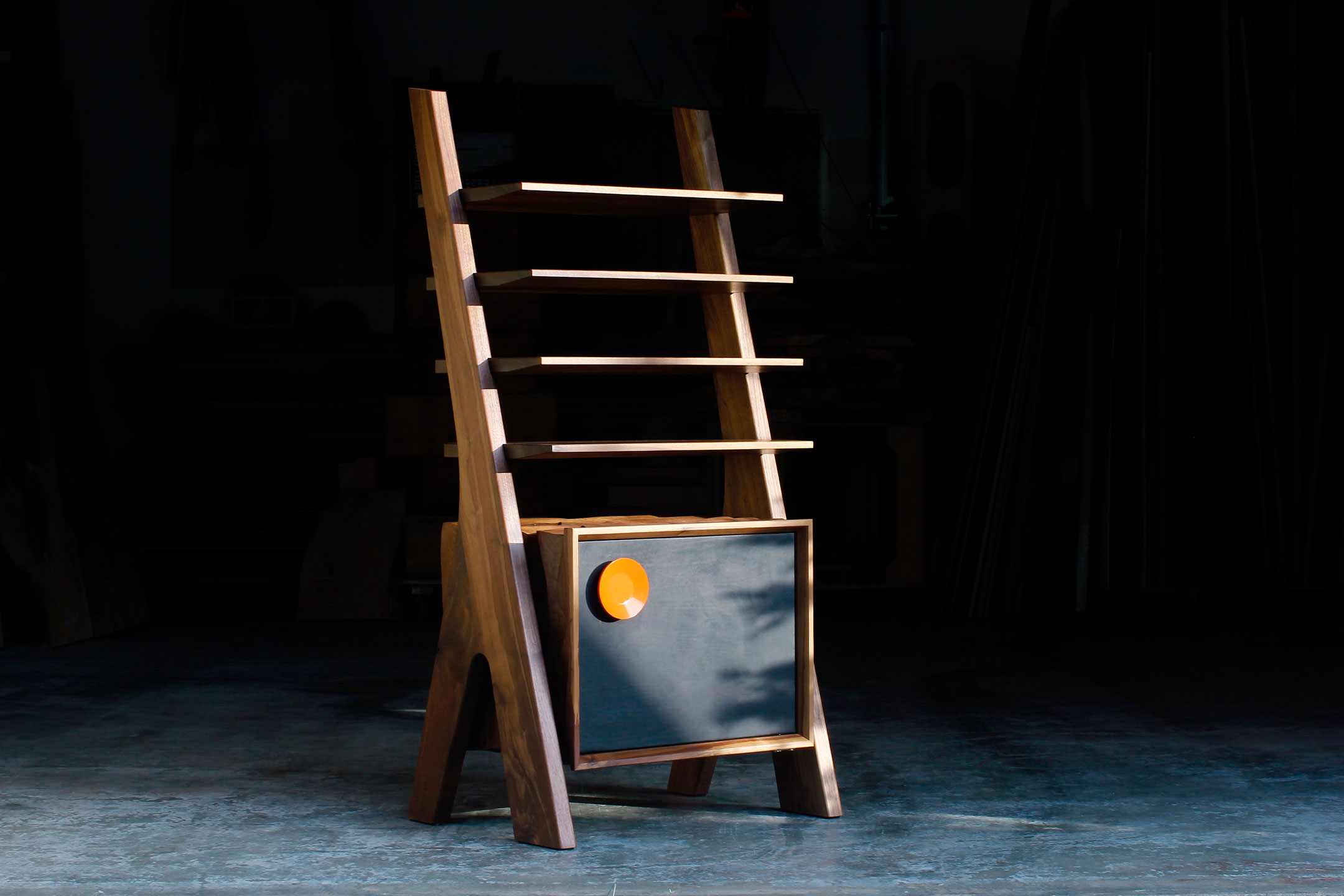
The St. Albans piece became an opportunity to experiment with bold colour, floating carved forms, amplifier fabric, leather, and powder-coated elements – all ideas he had been waiting years to explore.
The Noosa Chair allowed him to bring lifelike curves and movement into furniture in a way that felt sculptural and expressive.
Then there’s the original Coastal Table and upholstered corner bench – a project designed for a client who had dreamed of a custom corner dining set for over 40 years.
“She let me pour my ideas into it,” Jonathan says. “I designed the table base to feel nautical, mid-century, and Asian all at the same time.”
For Jonathan, the magic often happens in the moment – when creative decisions evolve naturally during the build process rather than being overplanned from the beginning.
“Sometimes design choices are hard to explain because they’re based on feelings,” he says. “A gut reaction to the material and process immediately in front of you.”



The Importance of Human Connection
While the craftsmanship matters deeply, Jonathan says the most rewarding moment comes after the piece leaves the shop.
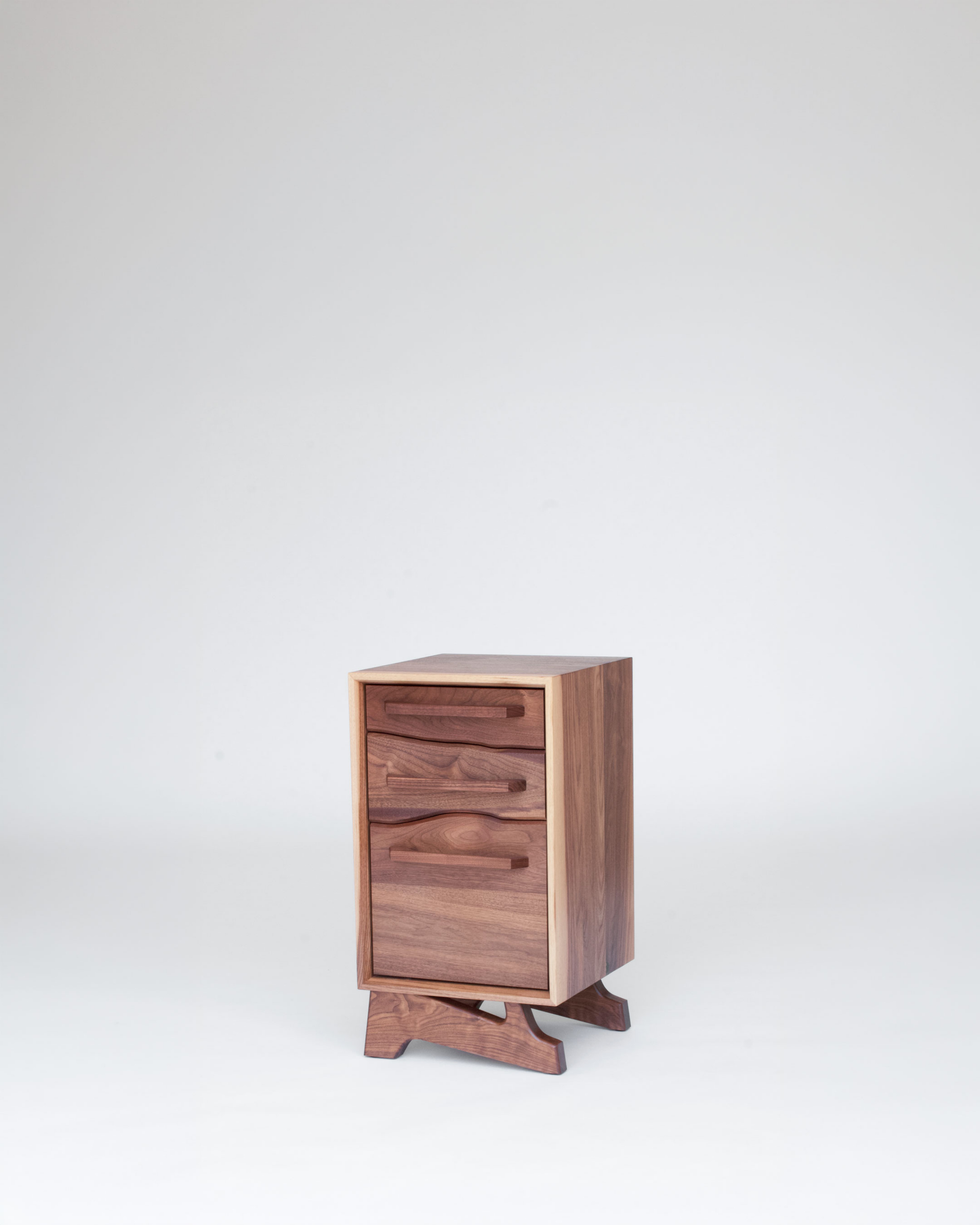
“When the customer first interacts with it – walks around it, touches it, opens and closes it – that’s when I feel I’ve arrived.”
That sense of connection continues long after delivery. Jonathan encourages customers to care for their pieces, “I often include a bottle of Osmo Wash and Care with my pieces. Like anything made from organic materials, there’s some education required and expectations to set. But the thing is, I’ve found most people are happy to care for their table, or bed, or whatever it is, because it’s one more moment of interaction with it. I want them to be proud of it.”


Looking Ahead
This year, Jonathan is especially excited about spending time with family, taking a road trip, and continuing to create highly artistic projects – including a carved walnut bed panel for a 1970s Suburban resto-mod.
He’s also passionate about mentorship and creating opportunities for others entering the trades.
“I’d really like to see more young people given the opportunity to try the trades and crafts,” he says. “A lot of kids could benefit from making things with their hands.”
That passion has inspired future plans for apprenticeships and woodworking workshops hosted on Whidbey Island alongside his wife – experiences designed not just to teach woodworking techniques, but to encourage creativity and design freedom. Jonathan notes to any readers, "Send me a message to get on my mailing list about potential future woodworking courses!".
“Don’t stop learning,” Jonathan says. “And make sure you’re the least talented person in the room. Surround yourself with people better than you are.”
It’s a philosophy that continues to shape not only his work, but the creative life he’s building around it.


Q&A: Jonathan Jung
Who are you and what do you specialize in?
Jonathan Jung.
The type of project I look for is the one that requires a design that’s unique to the space, needs high attention to detail, and has at least one feature that can’t be made by a machine. My hands have to get involved in an organic way, so that it’s clear the product is hand crafted. This lends itself to furniture and furnishings, as well as architectural woodwork like hand carved wall beds. I’m also currently getting involved in car interior resto-mods starting with a 70s Suburban bed panel that’s carved from walnut slabs.
How long have you been practicing? How did you get started?
I’m very grateful to have been doing this full time for 8 years. The life road to get here has been squiggly! As a kid I loved building stuff and had a lot of my own tools by age 10. Following popular advice though, I avoided the crafts thinking I couldn’t make a living, and got a degree and applied myself to various jobs and careers in 5 different countries. It wasn’t until my late 20s when my wife and I were living in New Zealand that I was exposed to the trades that do make a rewarding living. Once I saw that there was a market for real, artistic, well made products for home, business, and vehicle, I wrote up a basic business plan and started the process of building up the business and acquiring equipment and experience.
What inspires your designs and choice of materials?
My designs pull inspiration from many sources and places. My wife and I have spent years overseas and appreciate architecture and building methods from around the world. Whether the hand jointed timber frames in Japan, wonky old houses in England, or Brazilian mid-century curves on goverment buildings, there’s elements of all these building styles found in my pieces.
And I find myself getting ideas for form and function not just from structures but all manner of objects. From vintage cars and trucks to art deco and mid century appliances. Even tap dance shoes have inspired the shape of a furniture component. Like the music forms jazz and blues and others, there needs to be a general understanding of what a piece's rythym needs to be, and also when to let go and be a bit wild, have some fun like a virtuoso. I see furniture the same way, that a piece needs to have basic continuity, to not be a muddled mess of styles, yet also some soul, a bit of freeform whimsey. For this reason I'm not a fan of modernism where a bunch of boxes are plunked together and called a table, or a house or whatever. Where's the fun in that?
Other makers I look up to include Jory Brigham, Taylor Donsker, Caleb Woodard, Nathie Katzoff, and the legends Sam Maloof, Nakashima, and Wendell Castle.
Materials I choose must be as organic as possible. Now organic can mean a lot of things. For me it means healthy (can I eat it?), sustainable (what’s it like burned or buried in a landfill?), and sourced as close to home (we have lots of trees, why ship them halfway around the world?). For me, being a a maker is synonymous with being a steward of design and material.
How do you choose the finishes or treatments for your wood?
Selecting the right finishing product starts with choosing the right material. If the design calls for a dark wood look, then I simply choose a dark wood. I don’t do staining because it shows wear more obviously. There’s a lot of fun effects to be made by looking to the old ways of doing things, such as Yaki Sugi, black tea application, iron oxidizing, and many more. It may seem easier to go straight to chemicals but it’s not nearly as rewarding.
There’s a lot of good finishes out there. I think the key is picking one and mastering it, while being open to grabbing a different product when the need arises. Years ago I chose Osmo products, and now use it almost exclusively on nearly everything: furniture, trim, cabinetry, countertops, you name it.
What part of the process do you get the most satisfaction from?
The part I’m currently doing! I do enjoy almost all aspects of the business, from estimating and customer servive to making and machine maintenance.
What’s your favourite type of project to work on?
The one I’m currently working on! I’m thankful to be able to pick the projects that both interest me and pay the bills, so rarely do I get myself into something I regret. If the project allows for some element that's free form, whimsical, and fun, then I'm all in.
What do you value most in a finish: durability, ease of use, eco-friendliness, appearance, repairability?
All of the above, which is why I’m using Osmo.
We’ve asked you to share some of your favourite pieces finished with Osmo, can you tell us what makes them special to you?
All my pieces are special for different reasons, either because the customer was fantastic, or the design brief was fun, or the piece meant a lot to the customer. My favorite builds are the ones I was given near complete freedom for materials, aesthetic, and form. When I can unload a bunch of pent up ideas into a piece I really feel in my element.
The St. Albans is a good example of being able to make whatever I wanted. I’d been wanting to make a piece with more color and bolder form. So I included amplifier fabric and leather, designed around a floating carved box, tossed in some more powder coating, and came up with the format of the piece from ideas I’d had for years.
Another piece I thoroughly enjoy is the Noosa chair. It was so much fun to come up the whole look of it because the customer let me take the design however I wanted. I get a kick out of bringing lifelike forms into my pieces, whether through bold curves like on this chair or wave-like carvings like on the St. Albans.
And I can't forget the significance of the first Coastal table I made, with an upholstered corner bench set to wrap around it. The customer had been wanting a corner dining set for 42 years! She let me pour my ideas into it, building a planter into the bench and designing the table base to look nautical and mid century and Asian all at the same time.
I think the customer ends up with more creative value when they let the maker design and build as they go. It allows for more on the fly decisions that result in a more honed product. When there’s tons of back and forth between maker and customer, they will get what they want, but might be missing out on some spur of the moment opportunities that the maker sees only when in their element.
Also, sometimes design choices are hard to convey because they’re based on feelings, a gut reaction to the material and process immediately in front of the maker.
I am most happy in the shop when I can turn on some Khruangbin or Sons of the East and get into the flow process of having an idea, trying it out, adapting it, making it, and repeating.
For everything I make, the part of the process most special to me is when the customer first interacts with the thing. When they walk around it, touching it, opening and closing it or whatever the fuction is, appreciating the balance of its form and purpose, I feel I’ve arrived.
How do you feel about the upkeep and maintenance of your finished pieces?
Most of my customers understand that even the most well made items will require care. I’m happy to be able to provide solutions to the grittiest of life’s whoopsies, as well as daily care habits. I often include a bottle of Osmo Wash and Care with my pieces. Like anything made from organic materials, there’s some education required and expectations to set. But the thing is, I’ve found most people are happy to care for their table, or bed, or whatever it is, because it’s one more moment of interaction with it. I want them to be proud of it.
What are you the most excited about this year?
A road trip with my family and having creative-heavy pieces to design and make. In particular a match carved piece for a 70's Suburban resto-mod.
Do you have any advice for someone looking to enter your field?
First learn how you learn, then start learning. If you learn by doing, then maybe attend workshops or apprentice underneath someone you look up to. If you can learn by watching and copying, then there’s loads of content online. The key is getting adept at knowing good advice from bad advice. With the proliferation of videos, ads, and blogs comes a lot of advice and trends that are gimmiky or sell something you don’t really need or that's simply short-sighted. I learned early on to watch what the pros are doing, the guys that are creating to feed their families. Commercial businesses, furniture manufacturing, and full time makers might not have sexy Youtube channels, but their experience is more likely to result in sound advice because they’re less interested in producing content for clicks and more invested in producing quality work that lasts.
What would you like us to ask our audience?
Would you be interested in coming to beautiful Whidbey Island for a weekend-long furniture course hosted by me and my wife in my shop?
I'd like to see how many are interested.
Send me a message to get on my mailing list about potential future woodworking courses!
What is your favourite Osmo product?
LED Smart Oil! Just got it this morning and I’m sold. The ability to do multiple coats on site without driving back and forth, as well as more efficiently utilizing shop space because pieces won’t be sitting around curing, will be game changers.
What tool can you not live without?
That’s tough because I try to keep only the tools I need and enjoy, so in a way they are all my favorite! Shop space is precious for all of us, so if there’s something in it, it better have a good reason. Like Marie Kondo says, if it doesn’t spark joy, get rid of it!
What's something you wish you knew sooner in your woodworking career?
How much my mindset and life projection would be changed by reading the book Killing Sacred Cows. There’s a lot in it for someone wanting to better understand how to invest their time, energy, and money into creating value for others. One noteable thing for us makers, us woodworkers and metalworkers and craft people, is that everything has an opportunity cost. I definitely got sidetracked by good tool deals, restoring old equipment, chasing the best shop possible, without realising the true cost of acquiring the old tools and good deals, repairing them, dealing with problems, and eventually selling stuff to get better. I’m not saying I would have gotten a loan to outfit a better shop, or maybe I should have? The point is, I should have focused more on producing and less on the process. But that’s how my brain works, I love making things efficient and tidy and can get carried away finding better ways to do things. At the end of the day though, the customer is paying for a finished product, not how fancy your shop is.
Where do you usually shop for finishes and materials?
For leather I go first to Rocky Mountain Leather. For brass, copper, and other metals I go to a couple suppliers, both local and online. For slabs and lumber my first choices are Goby Walnut and Edensaw Woods. There’s many other speciality suppliers for fabrics, concrete, and hardward.
I get my Osmo products from Midwest Flooring in SD. Great service!
Do you follow makers or brands online for inspiration? If yes, which ones?
I like to watch the guys and gals that are producing truly creative, one off pieces, and doing so for a living. I’ve listed them above.
Anything else you’d like to share?
Don’t stop learning, and even then, make sure you’re the least talented person in the room. Surround yourself with people better than you are. The more I try to do with my craft and business, the more appreciative I get of the people around me that know more than I do about their thing. I’d like to focus more on doing what brings the most value, the best product with the largest infusion of creativity, to the customer. I’m increasingly aware that this means I can’t do everything like I did when first started the business. That’s part of growing I suppose, realising that at a certain point it’s better to let someone else do their expertise for me, to free me up to do what I do best and do more of it.
I’d really like to see more young people given the opportunity to try the trades and crafts. A lot of kids could benefit from making things with their hands and being shown a career path that’s not college and computers. That’s one reason I’m interested in having apprentices and hosting workshops. When I started out I couldn’t find a program or mentor that taught both the fundamentals of woodworking as well as design freedom. They were all geared towards a particular style or format, for example shaker furniture or modern cabinetmaking, but there wasn’t a place to learn how to be creative, untethered from a selected era or style. As I grow I’d like to offer more and more assistance to others to help develop their own design ideas and preferences.
Looking for handcrafted woodwork in Washington State?
Follow Jonathan’s work:
Website: https://www.jonathanjungdesign.com
Instagram: https://www.instagram.com/jonathanjung_design/
Facebook: https://www.facebook.com/jonathanjungdesign